Beyond Salary: Non-Monetary Retention Strategies That Work
BCS Editorial Team
Enterprise Solutions


(Source: Self-developed)
Employee retention is a critical issue facing organisations in a world where talent is rated as one of the most prized assets. While competitive salaries are still important, they are no longer the sole determinant of whether employees choose to retain their jobs or not.
The current workforce, particularly Millennials and Gen Z, is no longer interested in just a simple paycheck. They appreciate meaning, development, adaptability, and wellness. Companies should adopt non-financial methods of retention to accommodate such changing expectations and retain the best talent. The following are the best non-monetary methods of employee retention that really work.
Career Development Opportunities
Employees are interested in development. A good opportunity to enhance skills and learn is one of the most compelling reasons for keeping a job. A powerful message is sent when the organisation invests in training, upskilling, mentorship, and career development programs.
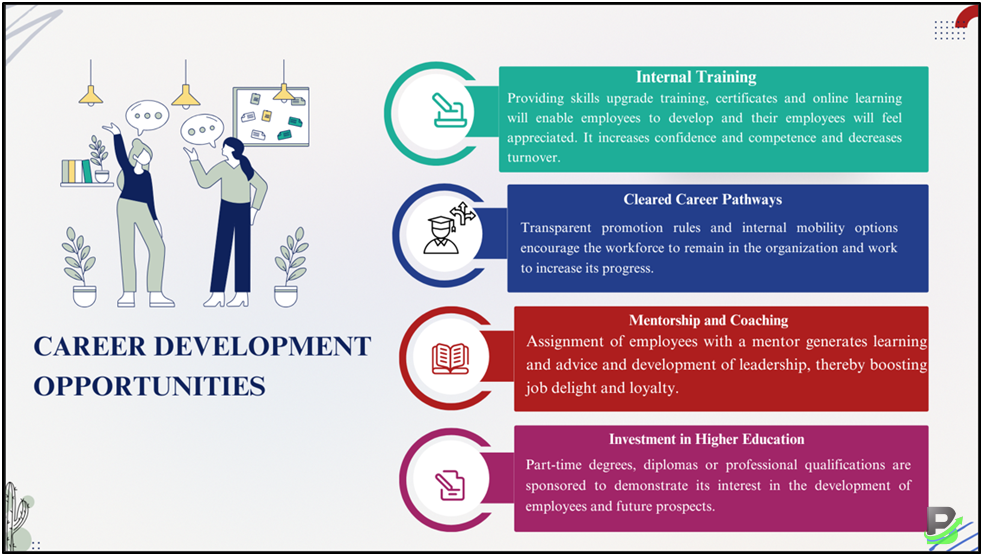
- Internal training: Providing skills upgrade training, certificates, and online learning will enable employees to develop, making them feel appreciated. It increases confidence and competence and decreases turnover.
- Clear career pathways: Transparent promotion rules and internal mobility options encourage the workforce to remain in the organisation and work to progress their careers.
- Mentorship and coaching: Assigning employees a mentor generates learning, advice, and leadership development, thereby boosting job satisfaction and loyalty.
- Investment in higher education: Sponsoring part-time degrees, diplomas, or professional qualifications demonstrates interest in the employee's development and future prospects.
(Source: Self-developed)
These plans build a culture of growth, which leads to employee retention by giving them a clear path to develop.
Recognition and Appreciation
Appreciation of efforts and contributions makes employees loyal and boosts morale. Minor things like sincerely thanking an employee during a team meeting, writing a handwritten note, or establishing formal recognition schemes will go a long way towards making employees happy.
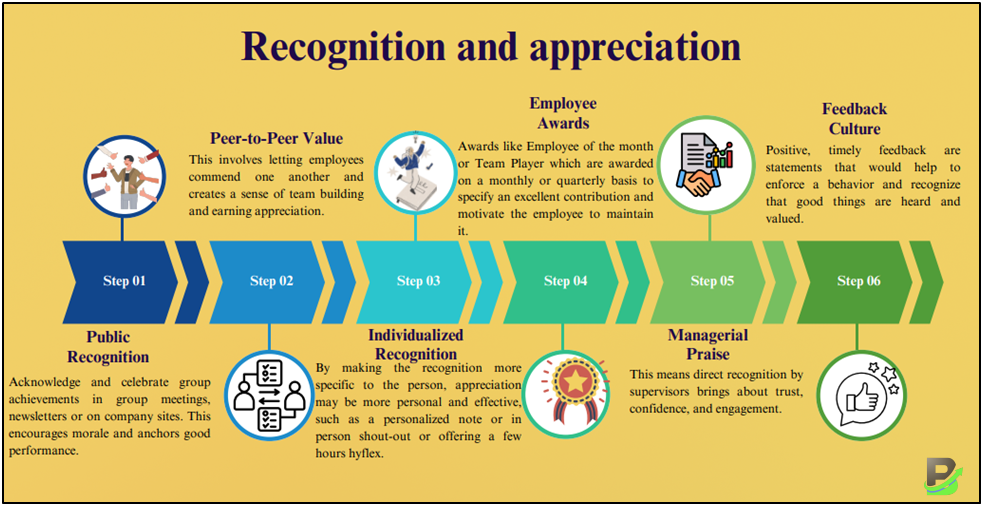
- Public recognition: Acknowledge and celebrate group achievements in group meetings, newsletters, or on company sites. This encourages morale and anchors good performance.
- Peer-to-Peer Recognition: This involves letting employees commend one another, creating a sense of team building and shared appreciation.
- Individualised recognition: By making recognition specific to the person, appreciation becomes more personal and effective. This could be a personalised note, an in-person shout-out, or offering a few hours of flex time.
- Employee awards: Awards like "Employee of the Month" or "Team Player," awarded on a monthly or quarterly basis, highlight excellent contributions and motivate employees to maintain them.
- Managerial praise: Direct recognition by supervisors builds trust, confidence, and engagement.
- Feedback culture: Positive, timely feedback reinforces good behavior and ensures that contributions are heard and valued.
(Source: Self-developed)
Good Workplace Culture
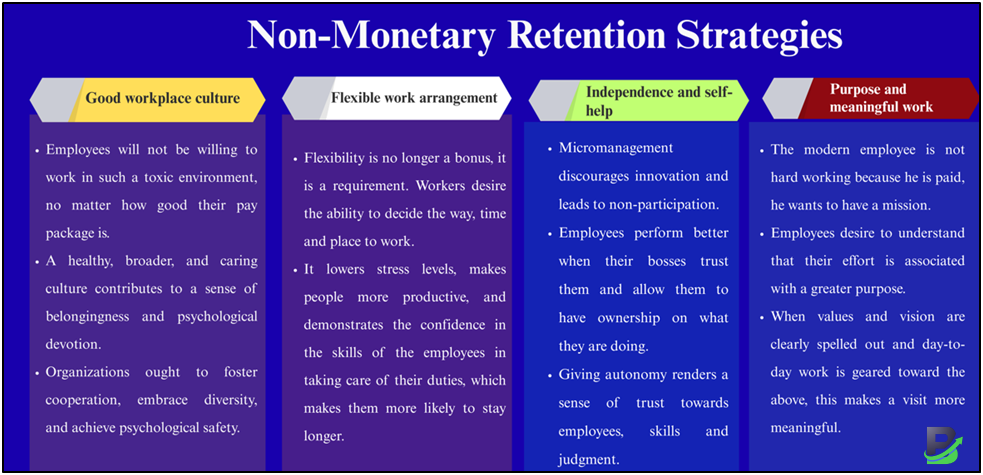
Employees will not be willing to work in a toxic environment, no matter how good their pay package is. A healthy, inclusive, and caring culture contributes to a sense of belonging and psychological safety. Organisations ought to foster cooperation, embrace diversity, and ensure psychological safety. Keeping employees safe, respected, and heard ensures they feel more committed and work to their best ability.
Flexible Work Arrangements
Flexibility is no longer a bonus; it is a requirement. Workers desire the ability to decide the way, time, and place to work. Be it remote work, hybrid work, flex time, or compressed workweeks, offering flexible arrangements leads to improved work-life balance. It lowers stress levels, makes people more productive, and demonstrates confidence in the employees' skills to manage their duties, making them more likely to stay longer.
Independence and Autonomy
Micromanagement discourages innovation and leads to disengagement. Employees perform better when their bosses trust them and allow them to have ownership of what they are doing. Giving autonomy fosters a sense of trust in employees' skills and judgment. When employees have power, they are usually more creative, efficient, and committed to institutions that trust and encourage their independence.
Purpose and Meaningful Work
Modern employees do not work hard solely for a paycheck; they want to have a mission. Employees desire to understand that their effort is associated with a greater purpose. When values and vision are clearly spelled out and day-to-day work is geared toward them, it makes the work more meaningful. Staff are committed and engaged when they feel attached to the purpose of the firm.
(Source: Self-developed)