Internal Mobility: The Secret to Retention in the Big Stay Era
BCS Editorial Team
Enterprise Solutions
(Source: Self-developed)
The current workplace post-pandemic is witnessing a rather fascinating phenomenon that can be termed as the "Big Stay". This situation contrasts with the “Great Resignation”, where people desperately sought new jobs at all costs; instead, they are remaining in their positions longer than before. This may not be because they are more content, but rather due to economic uncertainty, fear of job market insecurity, or lack of alternative opportunities. However, this juncture is a lost opportunity for businesses and an opportunity to transform internal mobility into the cornerstone of their retention policy.
Understanding Internal Mobility
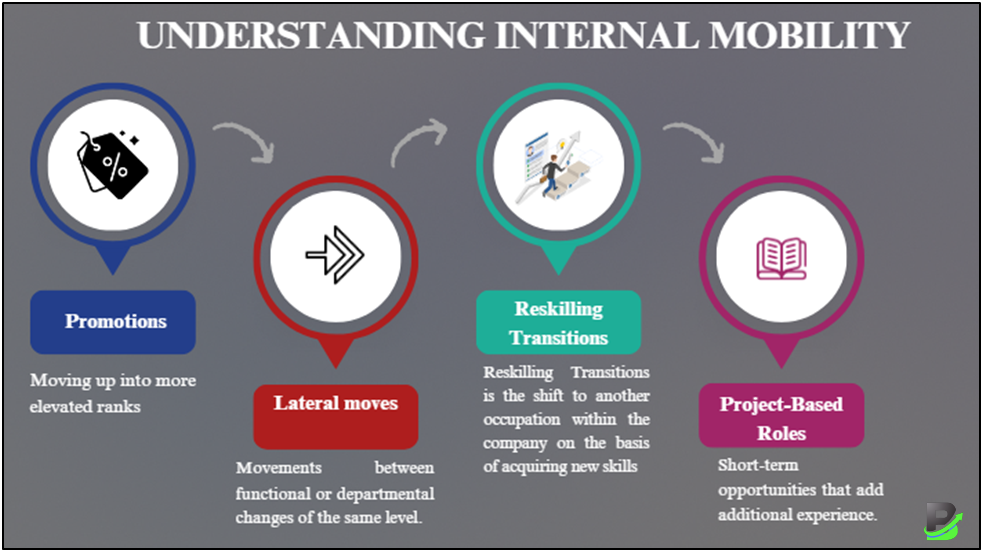
Internal mobility means the movement of employees across positions within the same organisation. This may relate to a promotion to a more senior job, a move to a new department horizontally, or a total career reorientation made possible by reskilling. When organisations implement a formal framework for internal mobility, this becomes a talent pipeline strategy because it addresses organisational requirements as well as individual career goals. It includes:
- Promotions: Moving up into more elevated ranks.
- Lateral moves: Movements between functional or departmental changes at the same level.
- Reskilling transitions: Shifting to another occupation within the company by acquiring new skills.
- Project-based roles: Short-term opportunities that add additional experience.
(Source: Self-developed)
Why Internal Mobility Matters in the Big Stay Era
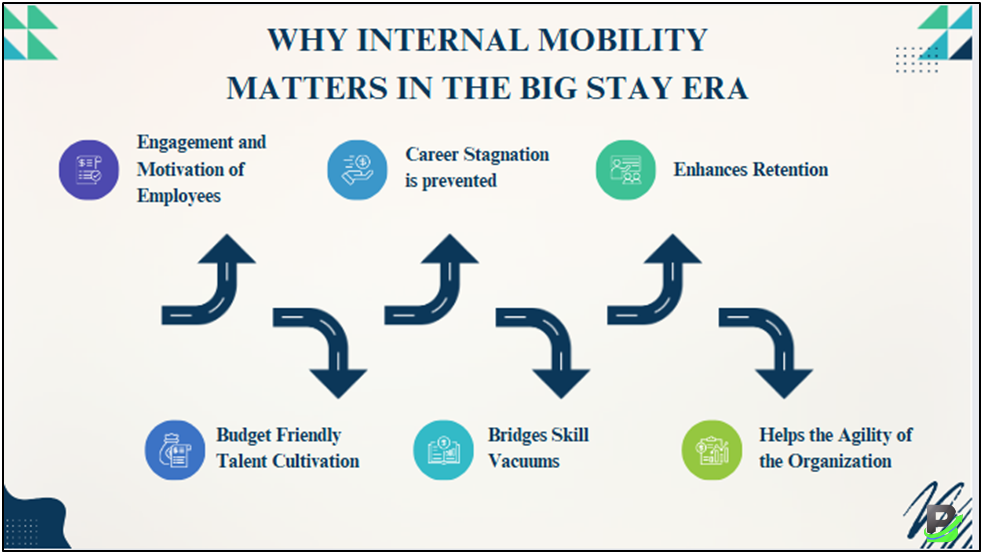
The "Big Stay" might sound like stability, but underneath, most employees remain disengaged, stagnant, and unutilised. Here is why internal mobility is crucial:
- Engagement and motivation of employees: During the Big Stay period, a large number of employees do not leave their job positions because of satisfaction but because of uncertainty in the marketplace. Mobility within a company presents new learning opportunities and challenges to employees, keeping them motivated and engaged.
- Preventing career stagnation: Lack of growth makes employees feel stagnated. Staff can shift paths, use new opportunities, or take on volunteer assignments before burnout occurs or disengagement becomes a possibility.
- Enhances retention: Organisations have a higher chance of retaining employees when they invest in them. Loyalty is created when employees see a way to develop within the company, making them less likely to want to change.
- Budget-friendly talent cultivation: Recruitment is expensive and time-consuming. Internal applicants require fewer resources and less time to be onboarded since they are already familiar with the company culture and processes.
- Bridges skill gaps: The decision to reskill available talent enables organisations to minimise skill gaps without crunching in the competitive labour market.
- Helps organisational agility: Internal mobility promotes cross-functional knowledge and experience, making the workforce more flexible and creative.
(Source: Self-developed)
The Business Case for Internal Hiring
Internal promotion is good business. External recruitment can be time-consuming and expensive, with funds used for advertising, interviewing, inducting, and training new employees. New hires also require time to get accustomed to organisational culture and business processes.
On the contrary, internal candidates have existing familiarity with the company, knowledge of the institution, and an understanding of the mission and values. This leads to greater internal stability and lower employee turnover in high internal mobility companies, bringing benefits such as longer employee tenures.
A Shift in Employee Values and Expectations
The Big Stay is motivated by a shift in employee attitudes, particularly among younger workers who value stability and meaningful connection above constant change. Many Generation Z employees, who were frequent job changers during the Great Resignation, are choosing to deepen their roots rather than try new things.
Some employees became disillusioned after transferring jobs and discovering unfulfilled promises concerning work-life balance, advancement prospects, or duties that did not match their descriptions. Others are looking for more meaning, purpose, and connection within their organisations, realising that creating connection and purpose requires time and dedication.
Transforming Retention into Lasting Commitment
According to the Conference Board, reducing voluntary staff turnover by 1% can save an organisation about $57 million each year. This gives HR departments the opportunity to develop internal talent, promote leadership, and strengthen culture. Organisations should avoid “hesitant retention” because it can lead to disengagement, reduced productivity, and reluctance to change. Instead, businesses should view the Big Stay as an opportunity to reduce recruitment and onboarding costs associated with turnover, and spend those savings on meaningful employee development.
Organisations can avoid the risks associated with hesitant retention by shifting resources into training, internal mobility programs, career coaching, and well-being initiatives. However, this necessitates investment in meaningful work, clear internal progression opportunities, and a sense of belonging and community. HR directors have a great chance to re-engage their current talent pool and win back their employees' hearts, minds, and long-term commitment.
In a time of the Big Stay, businesses need to direct their attention internally to realise their full talent potential. Internal mobility is not just a retention strategy but an employee culture that promotes learning, fosters desire, and instils loyalty.