HR AI Implementation: A Practical Roadmap for Small Businesses
BCS Editorial Team
Enterprise Solutions
AI has ceased to be a future-driven possibility in the modern world of rapidly changing business environments. It has become a viable instrument that can facilitate streamlining, optimize decision-making processes, and minimize costs, even for SMEs.
Although a common belief among many SME owners is that AI applications are reserved for larger companies that can afford them, the reality is that these tools are becoming increasingly affordable, accessible, and suitable for SME operations, particularly in the field of HR.
This blog provides a practical roadmap for AI implementation in HR functions for SMEs, offering systematic instructions, tips, and key factors to ensure a successful and sustainable implementation.
Why does AI in HR matter for SMEs?
HR is an essential function that can be immensely improved with the help of intelligent AI-based tools. Whether for talent acquisition, engaging with staff, payroll, or performance monitoring, AI is capable of automating repetitive tasks, delivering valuable data, and enabling human resources staff to pursue strategic initiatives.
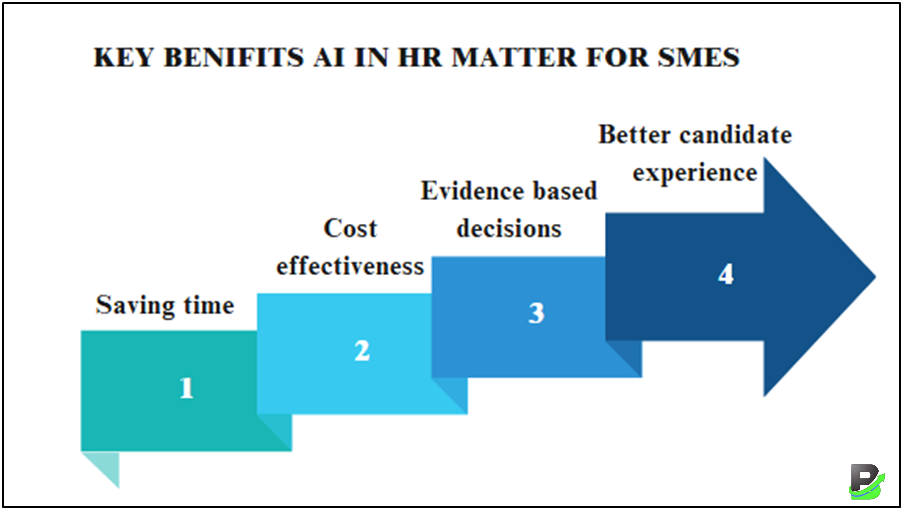
Key Advantages:
- Time Savings: Automating tedious processes such as resume screening, interview scheduling, and onboarding.
- Cost Effectiveness: Reducing dependence on third-party HR consultants or manual methodologies.
- Evidence-Based Decisions: Using employee data to enhance retention, engagement, and productivity.
- Enhanced Candidate Experience: Improved and more personalized communication through chatbots and other smart tools.
(Source: Self-developed)
Step 1: Identify HR Pain Points and Prioritize Goals
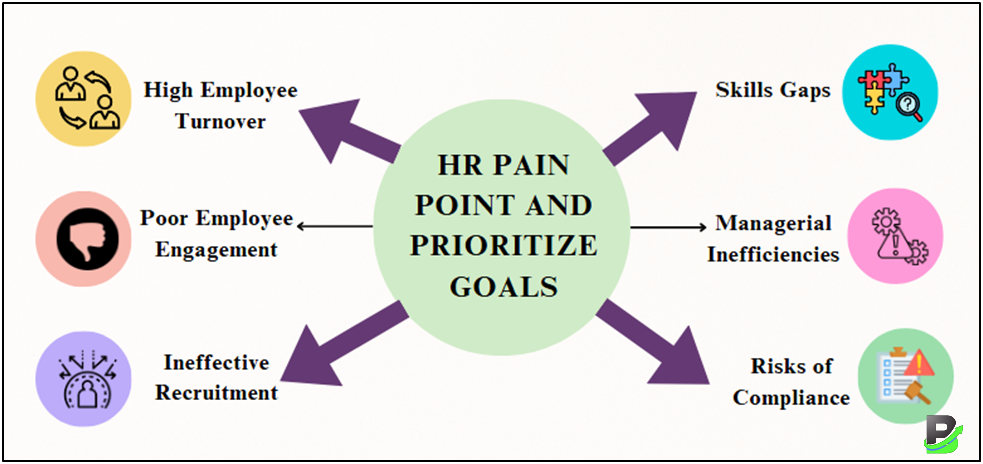
The first step is to map existing HR processes. Identify areas that are time-consuming, prone to error, or ineffective. Examples include:
- High Employee Turnover: Analyze turnover data and exit interviews to identify underlying causes such as poor engagement, ineffective compensation, or lack of growth.
- Poor Employee Engagement: Implement surveys on employee engagement, motivation, and morale to measure alignment with company values and identify hotspot areas.
- Ineffective Recruitment: Assess recruitment metrics such as time-to-hire and quality-of-hire to identify bottlenecks or inconsistencies with job specifications.
- Skills Gaps: Conduct a skills inventory and compare it with future business needs to prioritize training and development areas.
- Managerial Inefficiencies: Obtain feedback on leadership effectiveness to identify coaching or training needs.
- Compliance Risks: Review HR policies against current regulations to mitigate non-compliance risks.
(Source: Self-developed)
Step 2: Choose the Right AI Tools
Many off-the-shelf AI systems are available for HR teams in small businesses. These tools are often inexpensive, scalable, easy to use, cloud-based, and compliant with data protection regulations. Examples include Zoho Recruit, BreezyHR, HireVue, Leena AI, Talla, Tidio, Gusto, Paychex Flex, and BambooHR. It is advisable to use platforms that offer trials or demonstrations to assess their suitability before making a commitment.
Step 3: Start Small and Build Gradually
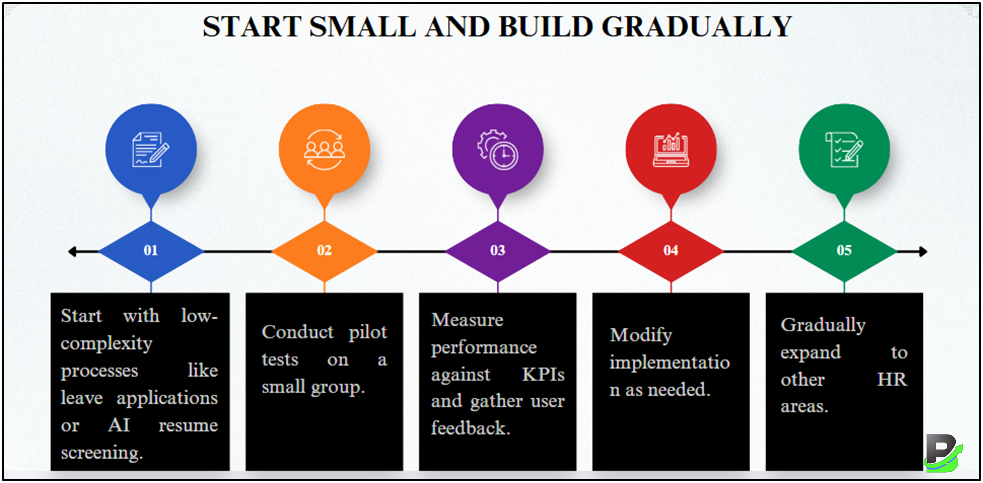
Start with low-complexity processes that offer a clear Return on Investment (ROI), such as leave applications or AI resume screening. Select a small group of employees, perform a pilot test, measure performance against established Key Performance Indicators (KPIs), and collect user feedback. Refine the implementation based on this feedback. Once comfortable, gradually expand to other HR areas.
(Source: Self-developed)
Step 4: Train Your Team and Communicate Transparently
The effectiveness of AI tools depends on their adoption by users. HR employees need basic training to understand the purpose of the new tools. Communicate clearly that AI supplements human roles rather than replacing them, aiming to minimize manual work, improve the employee experience, and ensure secure and ethical data handling.
Step 5: Ensure Compliance and Ethical Use
Small businesses must consider legal and ethical aspects of AI in HR, such as data privacy laws and regular auditing for algorithmic fairness. It is crucial to understand how AI tools affect decisions. Select vendors with transparent algorithms and clear privacy policies, and ensure employees are informed about the role of AI in decision-making.
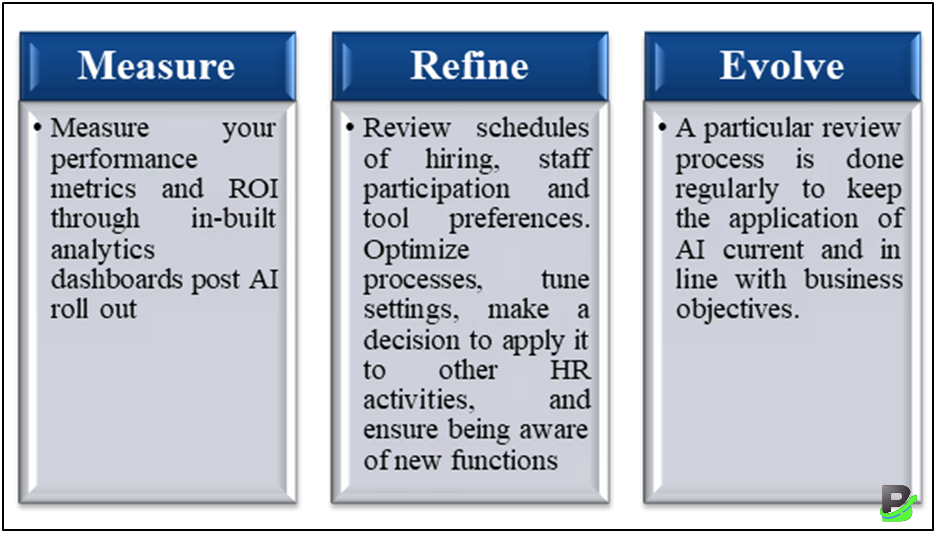
Step 6: Measure, Refine, and Evolve
Measure performance metrics and ROI using built-in analytics dashboards after the AI rollout. Review hiring schedules, staff participation, and tool preferences. Optimize processes, tune settings, and decide whether to expand to other HR activities. Regularly review the process to keep the AI application current and aligned with business objectives.
(Source: Self-developed)
Conclusion
AI in HR is no longer reserved for mega-corporations; it is a powerful asset that small businesses can leverage with minimal hurdles. Small business owners can establish a more agile, efficient, and people-focused HR function by pursuing a goal-oriented, phased strategy and selecting the appropriate tools.
The key is to start small, stay focused, and foster a mindset of innovation. AI can become a valuable ally for small businesses when combined with the right technology and human insight.