AI in Hiring: Navigating the Legal Minefield
BCS Editorial Team
Enterprise Solutions
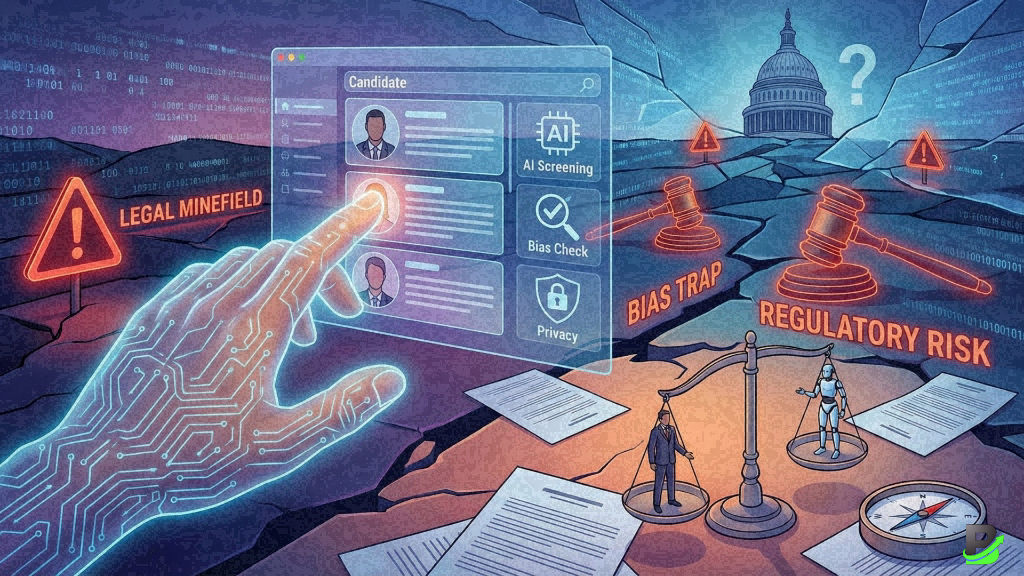

(Source: self-developed)
The future of hiring is in human-AI collaboration. Conversational AI is a good initial filter for finding applicants with the necessary skills, whereas recruiters prioritise cultural fit, communication style, and problem-solving ability.
Human oversight improves AI-driven processes, assuring fairness and reducing biases. AI improves recruiters' roles by automating repetitive screening activities, making the hiring process more efficient and fair.
Moreover, candidates value the open, participatory process, and AI has the potential to transform workforce planning by anticipating talent shortages, identifying skill gaps, and offering upskilling options. AI-powered career matching can help candidates find positions that fit their abilities and aspirations. However, ethical implementation and human control are required for AI-powered recruitment platforms.
A novel method of hiring is the conversational AI interviewer
Micro1 has created a conversational AI interviewer that assesses technical and soft abilities in real time while eliminating bias and subjectivity in traditional hiring approaches. This technique involves candidates directly in evaluating their competencies for the post, avoiding the danger of favouring specific backgrounds.
The conversational interviewer's adaptive questioning, geared to job-specific competencies, evens the playing field for non-traditional candidates, career changers, and under-represented groups, ensuring assessments reflect genuine potential rather than prior hiring patterns. This novel strategy solves the drawbacks of conventional hiring approaches.
For example, Amazon abandoned an AI hiring tool after discovering that it penalised resumes with the word “women’s”, demonstrating how such systems can unintentionally perpetuate past inequality.

(Source: self-developed)
Discrimination in, Bias out: The Algorithmic Conundrum
AI, despite being a neutral decision-maker, might perpetuate biases in hiring procedures if previous data shows them. This can lead to discriminatory employment practices, especially among under-represented groups. HR professionals must monitor and fix AI models by employing different datasets, assessing results on a regular basis, and changing algorithms to reduce bias. Diverse hiring data is critical for attracting the desired talent pool.
The black box problem: Transparency
AI confronts a big hurdle in transparency, known as the "black box problem," which occurs when judgements are made without explicit reason. This is a difficulty for HR leaders, especially when candidates or regulators seek explanations for rejections or passes. To achieve ethical recruitment, AI solutions must be transparent, and HR departments should select vendors who value explainability. AI systems should also be transparent in candidate selection.
Data privacy
AI in recruitment generates personal information, which raises privacy problems. Organisations must verify that their AI technologies comply with data protection rules such as General Data Protection Regulation (GDPR) and Central Consumer Protection Authority (CCPA) in order to prevent data breaches and maintain data security, as mismanagement may result in legal consequences.
Job applicant experience
While AI can improve recruitment efficiency, it should not replace human engagement. While AI can scan resumes, it lacks the emotional intelligence to recognise context and emotions.
To develop an ethical, AI-enhanced process, a balance of efficiency and human interaction is required. Candidates should feel respected, not shuffled through a robotic production line. AI should not be used to replace human engagement in the recruitment process.
Accountability
AI can streamline recruitment, but it does not accept responsibility for mistakes. HR must accept responsibility for biased recruiting decisions and data leaks. Ethical AI use necessitates accountability for complex systems, and the implementation team should bear responsibility. When employing AI to make recruiting decisions, human monitoring is critical.
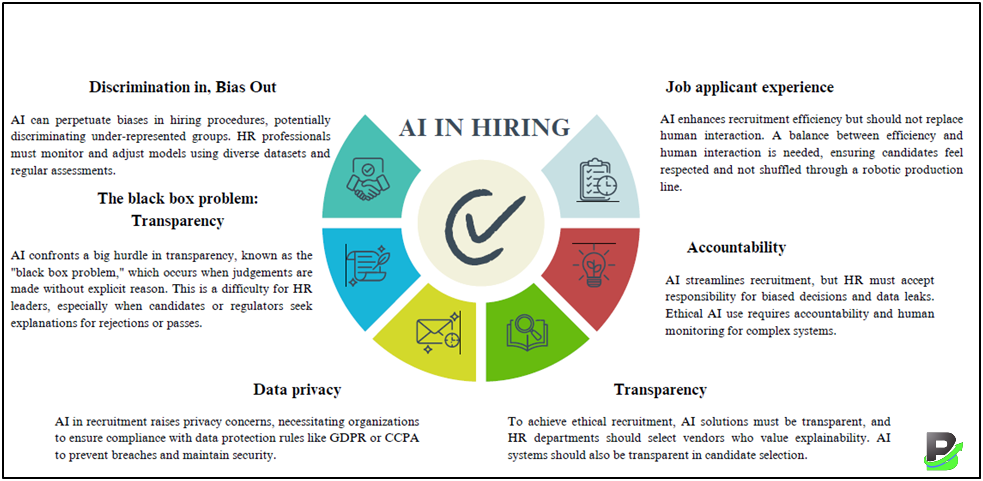
(Source: Self-developed)
Case example: “Legal Considerations for Canadian Employers Using AI Tools in Hiring”
Employers are increasingly using AI to help them make more efficient and data-driven employment decisions. Employers now have heightened legal liability, notably in terms of privacy and potential bias. In March 2024, the Ontario government filed “Bill 149”-Working for Workers Four Act, which tackles current workplace challenges in Ontario by amending the Employment Standards Act of 2000. Employers must state in job advertising whether AI was used in the hiring process, specifically when screening, assessing, or choosing applicants for the position.
Employers will be forced to state in job ads if they use AI in the recruiting process beginning January 1, 2026, in order to increase transparency for job searchers. The Ontario government intends to address the ethical, legal, and privacy issues of AI in the employment process, ensuring that employers understand the possible risks and best practices for incorporating AI technologies into their hiring and recruitment processes.
Bill 149 has received its first reading and will now move through the legislative procedure. Employers should assess their processes to prepare for potential changes, but job-posting adjustments may be premature. It will track Bill 149's progress and provide updates.
Hiring Legal Expertise for AI in E-Commerce Start-ups
Start-ups encounter hurdles when navigating the legal landscape of AI in e-commerce, thus employing legal expertise is critical to ensuring compliance and mitigating risks. These professionals can help with data protection, intellectual property (IP), contract negotiations, and regulatory compliance. Although it may entail a financial investment, the long-term benefits outweigh any potential legal hazards.
Ethical Implications of AI in E-Commerce
AI in the e-commerce market provides several benefits while also raising ethical problems. Start-ups must verify that AI algorithms used for recruitment and pricing make fair and unbiased decisions. Transparent and explainable AI systems are critical to preserving confidence and accountability. Start-ups should incorporate ethical rules into their AI development processes and frequently evaluate the impact of their AI systems on stakeholders.
Conclusion
In conclusion, the future of hiring will involve human-AI collaboration, with conversational AI acting as an initial filter for locating qualified candidates. AI can automate repetitive screening tasks, making recruiting more efficient and fair. It can predict talent shortages, detect skill gaps, and provide upskilling opportunities. Micro1 has created a conversational AI interviewer that evaluates both technical and soft skills in real time, removing prejudice in traditional hiring approaches. HR workers must monitor AI models, evaluate results on a regular basis, and modify algorithms to avoid bias. Transparency is critical, and AI adheres to data protection regulations.