The End of HR As We Know It: How Agentic AI is Redefining Work
BCS Editorial Team
Enterprise Solutions
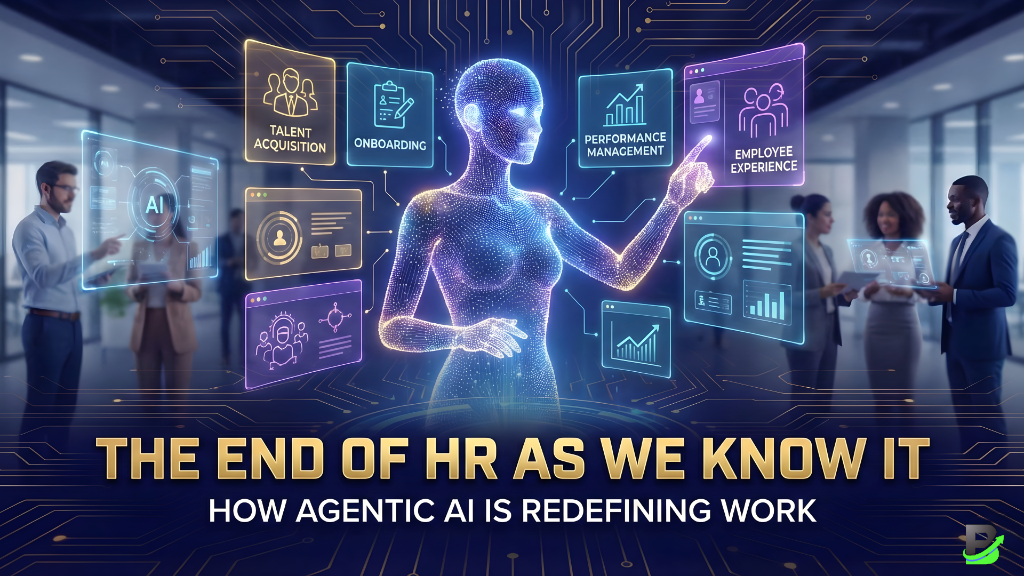
Agentic AI in HR: Using Autonomous Intelligence to Redesign the Talent Lifecycle.
What is Agentic AI?
For connecting with data platforms and helping with time-consuming operations, agentic AI, which is driven by autonomy and adaptability, is predicted to transform sectors including manufacturing, healthcare, and finance. As digital labor, this AI is capable of making judgments and effectively adjusting to novel circumstances.
What are AI agents for HR?
AI agents for HR are AI-powered solutions that improve and automate HR tasks. They use large language models (LLMs) to analyze data in real time, respond to user input, and carry out HR workflows on their own. They are being utilized more and more to help HR departments with compliance, payroll management, performance management, employee experience, and talent acquisition.
Why are AI agents for HR important?
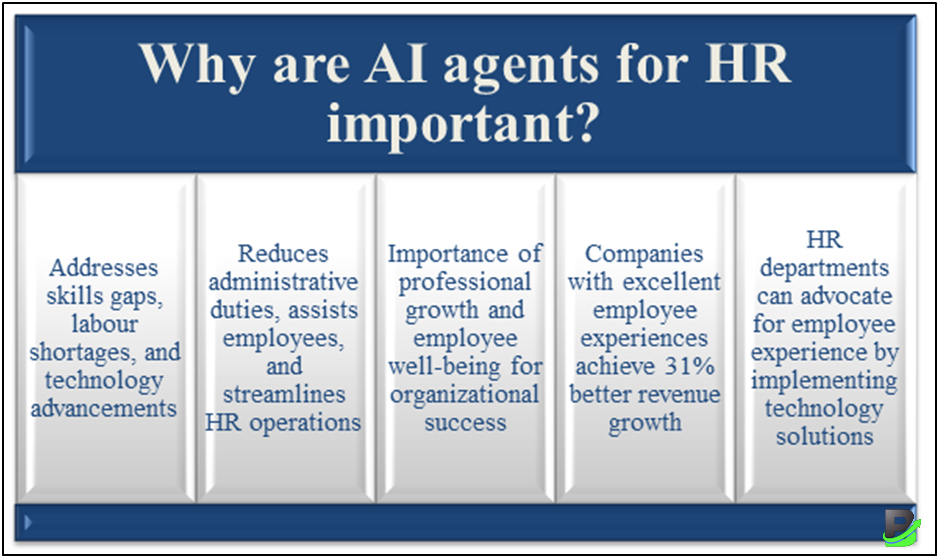
Conversational AI agents have the potential to completely transform HR by tackling skills gaps, labor shortages, and technology advancements. These agents lessen administrative duties, help employees, and streamline HR operations. For an organization to succeed, it is essential to invest in the professional growth and well-being of its employees. Contented workers who never stop learning boost output.
Companies that provide excellent employee experiences, for instance, achieve 31% better revenue growth. According to data from IBM Consulting, implementing self-service solutions for repetitive operations can reduce the cost of providing HR services by 50% to 60%. HR departments may become advocates of the employee experience by implementing important technology solutions that improve user experience and lessen administrative costs.
(Source: Self-developed)
How do HR AI agents work?
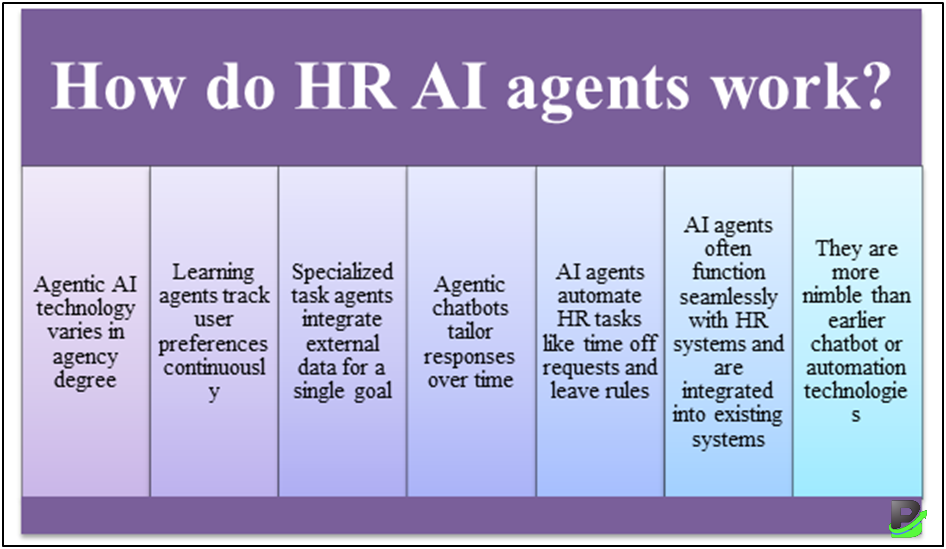
The degree of agency in agentic AI technology varies; some agents, like learning agents, continuously react to new inputs to track user preferences, while others, like specialized task agents, integrate external data to accomplish a single goal. Over time, agentic chatbots tailor their responses, offering all-inclusive services and taking into account the best course of action.
Moreover, the AI agents are employed in workplace applications to automate HR tasks like handling time off requests and delivering customized leave rules. These agents frequently function flawlessly with HR systems, such as HCM platforms and software, and are integrated into pre-existing systems. AI agents are more nimble than earlier chatbot or automation technologies since they can carry out complicated tasks on their own.
(Source: Self-developed)
Benefits of using AI agents for HR
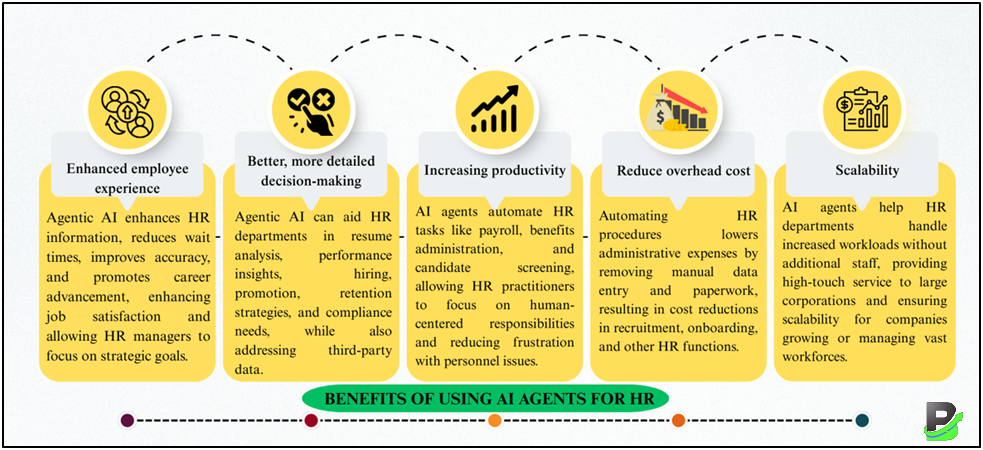
Integrating AI agents into an HR department can provide several interlocking benefits that save businesses time, money, and wasted effort.
Enhanced employee experience
Agentic AI provides personalized HR information, shortens wait times, increases answer accuracy, and promotes career advancement, hence increasing job satisfaction. It allows HR managers to focus on relationship-building and strategic goals while minimizing repetitive work.
Better, more detailed decision-making
Agentic AI may assist HR departments in analyzing resumes and providing performance insights, ingesting data to influence decisions regarding hiring, promotion, and retention strategies, as well as addressing third-party data such as compliance needs.
Increasing productivity
AI agents automate HR duties like payroll, benefits administration, and candidate screening, allowing HR practitioners to focus on more human-centered responsibilities. Real-time access to regular HR duties decreases the amount of time spent dealing with frustrating personnel issues.
For example, IBM's AskHR technology automates 80 HR processes, addressing 10.1 million interactions every year, saving 50,000 hours and $5 million. The tool also greatly increased the HR department's customer satisfaction rating.
Reduce overhead cost
Automating HR procedures lowers administrative expenses by removing manual data entry and paperwork, resulting in cost reductions in recruitment, onboarding, and other HR functions.
Scalability
AI agents assist HR departments in handling increased workloads without the need for additional staff, giving high-touch service to large and worldwide corporations while remaining instantly scalable for companies growing or managing vast workforces.
(Source: Self-developed)
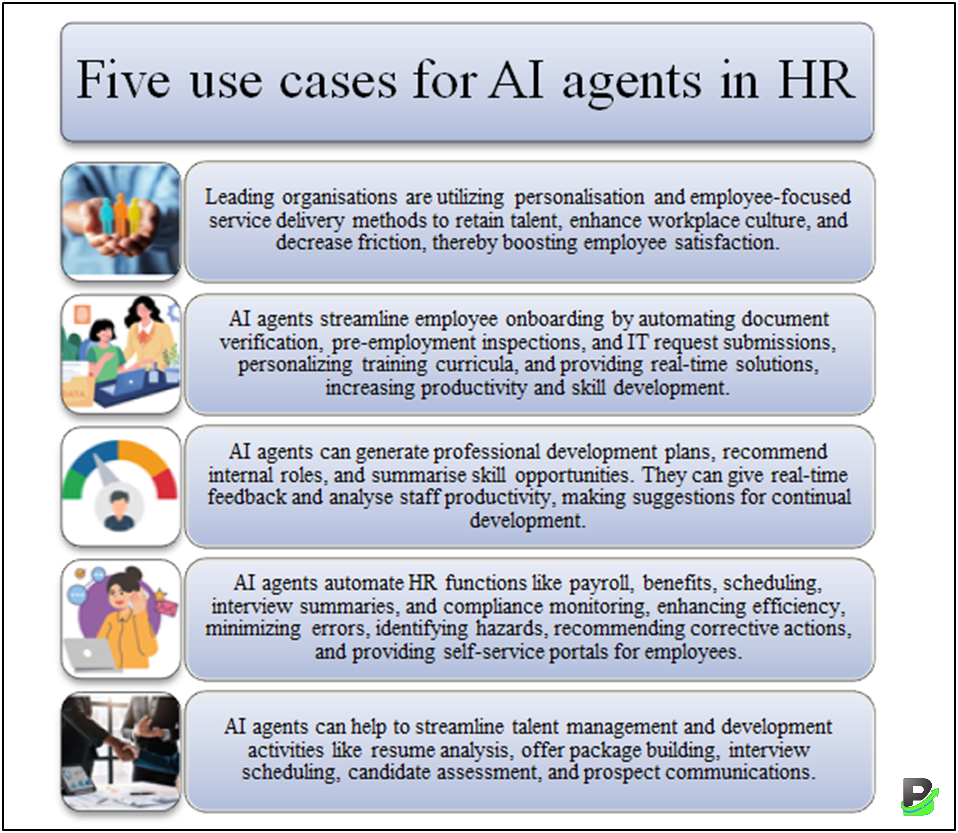
Five use cases for AI agents in HR
The five use cases for AI agents in HR include:
Employee engagement and retention
To retain talent and engage employees, leading organizations embrace personalization and employee-focused service delivery methods. AI agents answer requirements, enhance workplace culture, and decrease friction. Personalized communication enables HR managers to focus on pressing issues, hence enhancing employee satisfaction.
Onboarding and training
AI agents automate document verification, pre-employment inspections, and IT request submissions to ensure a seamless employee onboarding process. They personalize training curricula, maintain user profiles, and provide real-time solutions to popular questions, thereby increasing productivity and skill development.
Performance management
AI agents can generate professional development plans, recommend internal roles, and summarize skill opportunities. They can give real-time feedback and analyze staff productivity, making suggestions for continual development.
For example, IBM employs a rules-based digital worker to aid HR managers with the quarterly promotion process, automating data collecting and formatting for up to 17,000 employees. This allows HR departments to make key workforce planning decisions while saving time.
Administration
AI agents automate HR functions like payroll, benefits, scheduling, interview summaries, and compliance monitoring, hence enhancing efficiency and minimizing errors. They maintain policy compliance by identifying hazards and recommending corrective actions, as well as providing self-service portals for employees.
Talent acquisition
AI agents can help to streamline talent management and development activities like resume analysis, offer package building, interview scheduling, candidate assessment, and prospect communications.
For example, FloCareer employs AI to find diverse candidates from a 169 million database, reducing time and improving hiring effectiveness. These technologies assist HR departments in identifying qualified candidates, making informed decisions, and focusing on improving the candidate experience.
(Source: Self-developed)
Best strategies for utilizing AI agents in HR
AI agents can complete complicated jobs on their own, but they should help humans make better decisions. Successful organizations set up mechanisms for human assessment of AI-generated recommendations, especially for sensitive HR operations such as recruiting, promotions, and performance appraisal. Integrating AI with a wide range of HR management systems, communication tools, and external databases increases its effectiveness.
Successful AI adoption requires a focus on change management and staff upskilling. When employee involvement is prioritized in transformational design, it is 34% more probable that new business technology will be adopted. Successful organizations invest in training and change management methods to help employees collaborate effectively with agents.
Redesigning the company-operating paradigm is critical for AI-powered HR strategy. Successful businesses change roles and responsibilities to maximize AI solutions' possibilities, ensuring that employees and technology collaborate efficiently.
Training AI bots on appropriate datasets is critical to their efficacy. Task-specific data, such as personnel information, candidate profiles, or organizational norms and procedures, can significantly increase an agent's task performance. AI agents should be trained with high-quality, unbiased, and diverse data that is continuously updated to reflect changes in corporate policy, industry standards, and worker expectations.